
.avif)
Battery Manufacturing Ductwork: Liquid-Tight Systems for Battery Plants
Introduction
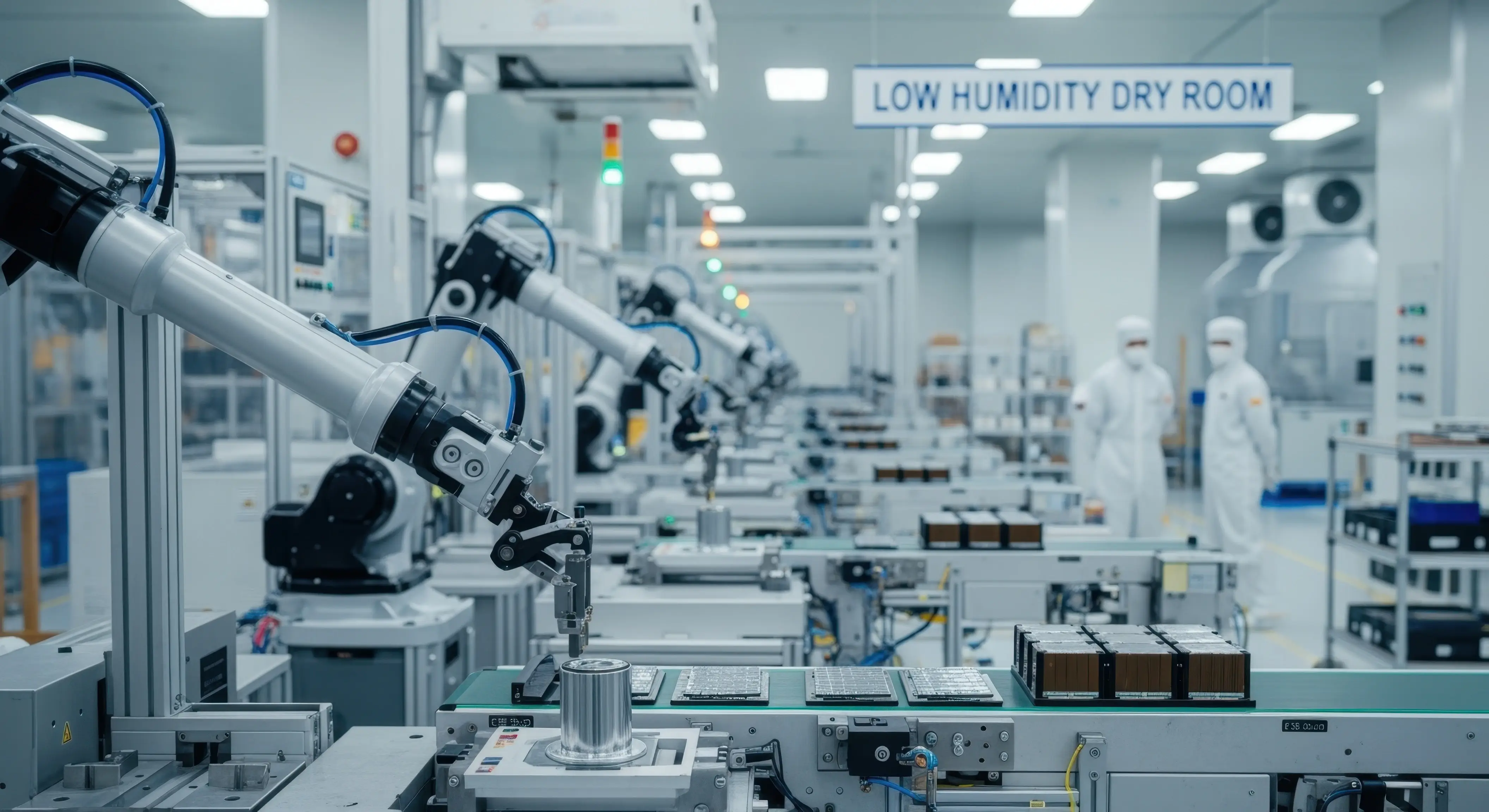
Battery manufacturing ductwork failure is not an option. In lithium-ion battery plants, ventilation systems must contain corrosive vapors, prevent moisture ingress, and maintain airtight performance in ultra-controlled environments. For facilities, process, and engineers designing battery manufacturing ductwork, the real challenge is not airflow volume. It’s containment.
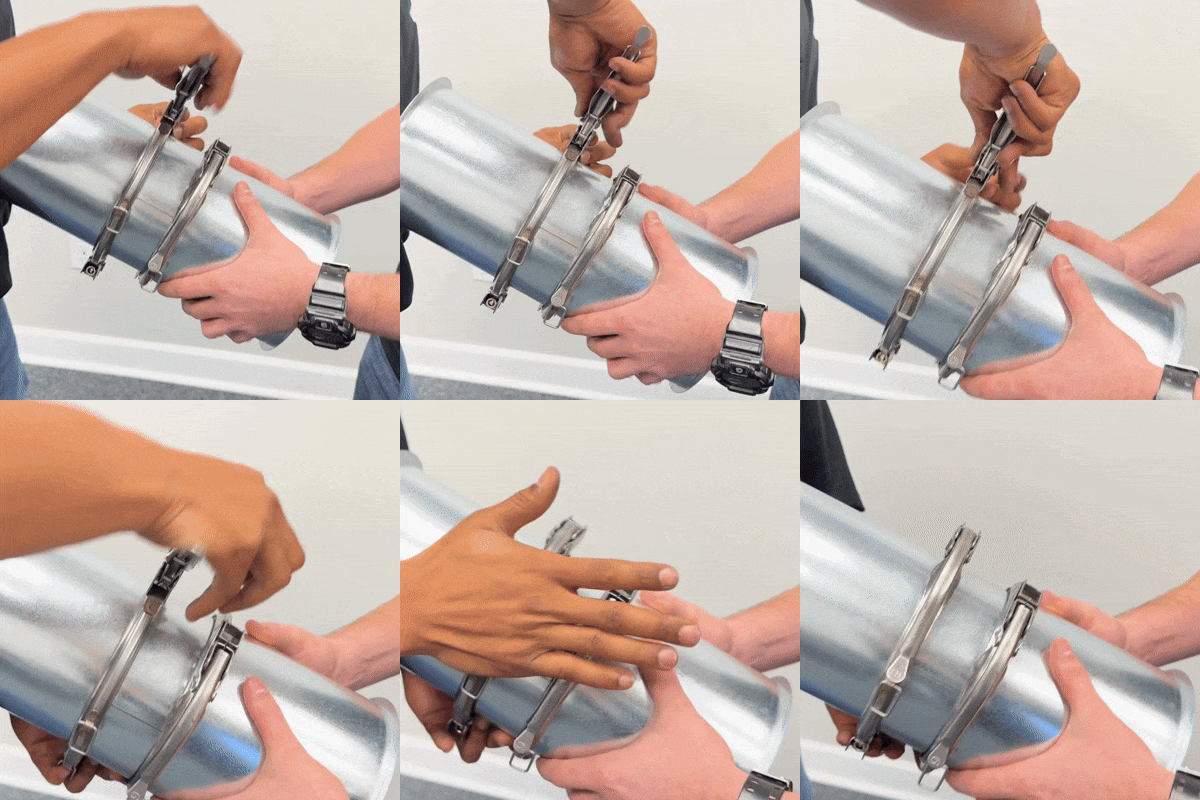
US Tubing delivers liquid-tight, airtight ductwork engineered for battery manufacturing environments where standard industrial ducting fails.
US-Duct
Why Standard Ductwork Fails in Battery Manufacturing Plants
Battery manufacturing environments expose ducting systems to conditions far beyond typical industrial ventilation design parameters.
Corrosive Chemical Exhaust
Electrode coating and solvent recovery processes release aggressive vapors such as NMP (N-Methyl-2-pyrrolidone). These chemicals rapidly degrade the gaskets used in conventional ductwork, leading to leaks, corrosion, and premature system failure.
Moisture Ingress in Dry Rooms
Lithium-ion battery chemistry is extremely sensitive to humidity. Even microscopic leaks at duct joints can allow ambient moisture to enter dry rooms, causing yield loss, cell defects, and unplanned downtime.
Oil Mist and Aerosol Leakage
Machining and assembly operations generate oil mist and fine aerosols that seep through slip-joints and friction-fit connections. This creates fire hazards, floor contamination, and long-term maintenance issues.
Standard ducting was never designed for these conditions.
.webp)
Liquid-Tight Battery Manufacturing Ductwork Engineered for Containment
US Tubing is not a modified version of traditional ductwork. It is a built-for-battery manufacturing ductwork system –engineered to eliminate leakage at its source: the joint.
Laser-Welded Steel Ductwork
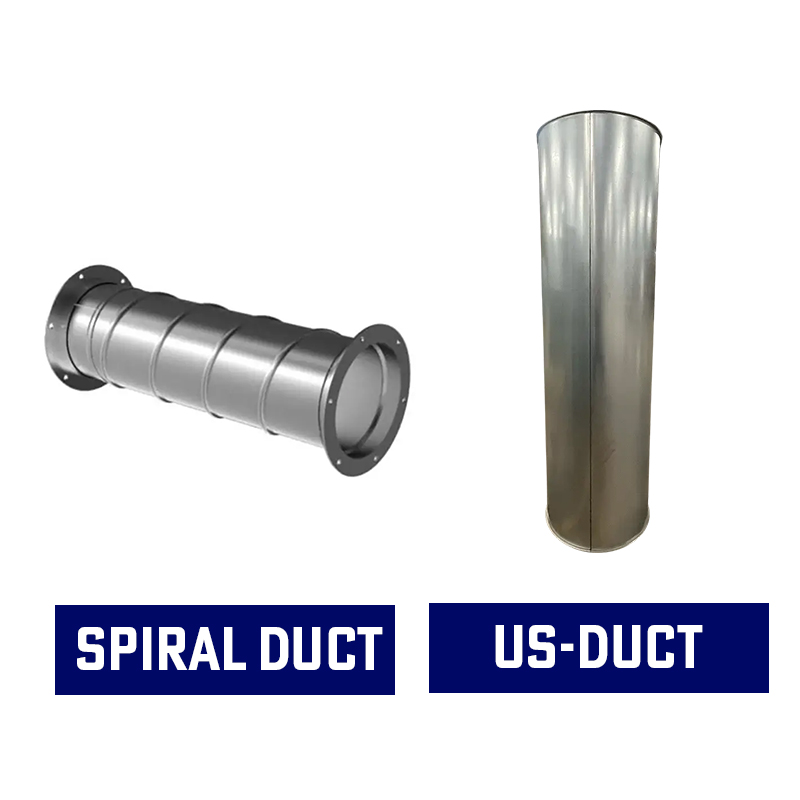
Unlike spiral duct, US Tubing is laser-welded along the longitudinal seam. This produces a continuous steel duct that cannot leak through the pipe wall itself, making it well-suited for chemical exhaust applications in lithium-ion battery plants.
Vanstone Gasketed Flanges for Precision Sealing
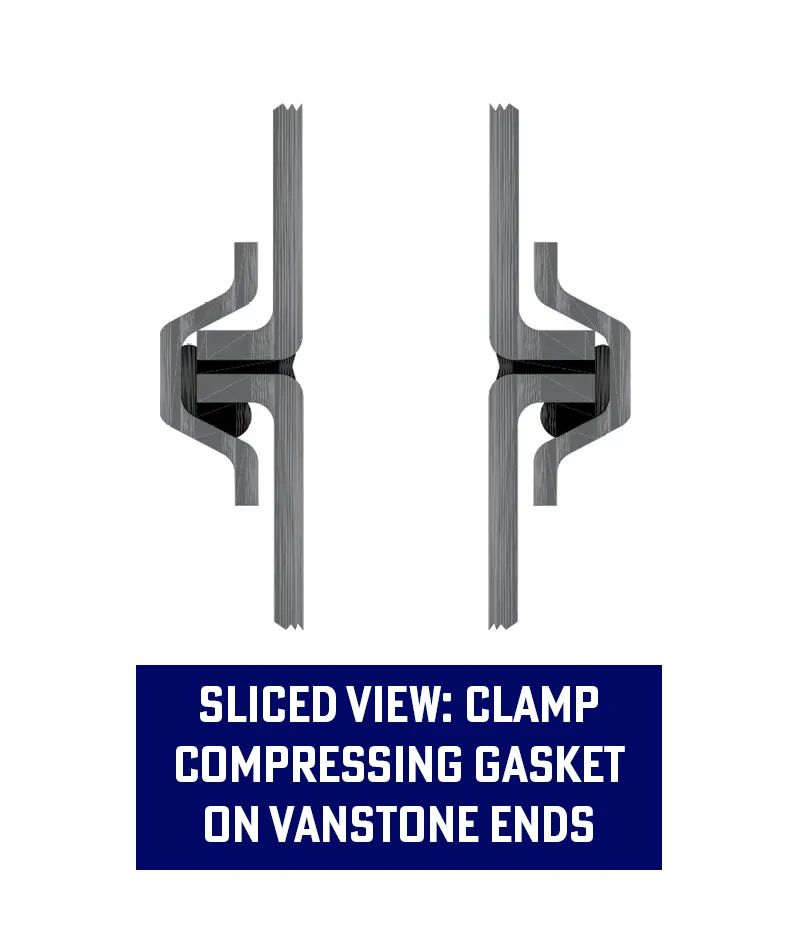
Every duct section terminates with a Vanstone flange, creating a true 90-degree sealing surface. This ensures flat, uniform contact between mating duct sections and gasket while eliminating the misalignment common in conventional flanged systems. For battery manufacturing ductwork, joint precision matters as much as material selection.
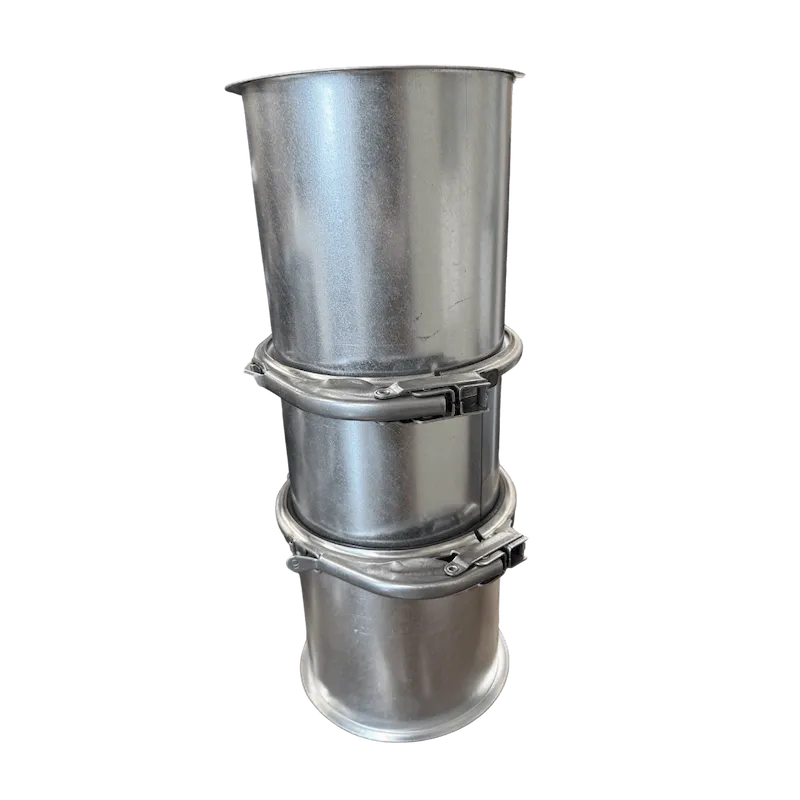
The Ultimate Seal®: Airtight and Liquid-Tight by Design
Traditional duct systems bury the gasket inside clamps, leading to uneven compression and eventual leaks. The Ultimate Seal® places a heavy-duty V-gasket directly on the flanged surface, where it can be uniformly compressed.
Gasket materials are selected based on application requirements, including silicone, Viton, and EPDM for chemical compatibility.
Key performance advantages include:
- 360-degree mechanical compression
- Proven airtight and liquid-tight sealing
- Maintains integrity under continuous high-pressure electrode exhaust
- Resists chemical degradation from battery manufacturing vapors
US Tubing systems are specified in high-volume lithium-ion battery manufacturing facilities where zero-leak containment is required for solvent exhaust, dry room ventilation, and corrosive vapor control.
Why Engineering Firms Specify US Tubing for Battery Plants
US Tubing addresses two critical challenges engineers face on battery manufacturing projects: installation efficiency and long-term adaptability.
Rapid Installation
Clamp-together connections eliminate field welding and heavy bolting. Installation time can be reduced by up to 70 percent, helping large-scale battery factory projects stay on schedule.
Modular and Scalable Design
As battery chemistries evolve and production lines change, US Tubing ductwork can be disassembled, cleaned, and reconfigured without sacrificing seal performance. This flexibility is essential for facilities planning future expansion or process upgrades.
Battery Manufacturing Applications
US Tubing liquid-tight ductwork is engineered for critical battery plant applications, including:
- NMP solvent exhaust systems
- Dry room ventilation
- Electrode coating and drying lines
- HF and corrosive vapor containment
- Chemical mixing and material handling areas
Frequently Asked Questions
How does US Tubing reduce installation costs in large-scale battery plants?
Traditional flanged or welded systems are labor-intensive. US Tubing utilizes a clamp-together connection system that eliminates the need for field welding or heavy bolting. This can reduce total installation time by up to 70 percent
Is liquid-tight ducting required for lithium-ion dry rooms?
Yes. Dry rooms require strict humidity control. Even minor duct leakage can introduce moisture that compromises lithium-ion cell chemistry and production yields.
Is the ductwork reusable if we reconfigure our production lines?
Absolutely. Because the system is modular and uses precision-fit clamps rather than permanent welds, the ductwork can be disassembled, cleaned, and reconfigured. This is a critical advantage for facilities that expect to upgrade processes or change battery chemistries in the future.
How does NMP affect standard duct gaskets?
NMP degrades common rubber and silicone gaskets, leading to softening, cracking, and seal failure. Chemically compatible gasket materials and uniform compression are required for long-term containment.
What materials are available for US Tubing battery manufacturing ductwork?
Our systems are typically constructed from galvanized steel or 306 or 314 stainless steel to withstand corrosive chemical exhaust. We offer a variety of gasket materials, including Viton, Silicone, and Buna-Nitrile, to ensure chemical compatibility with specific battery production byproducts like NMP.
What makes US Tubing liquid-tight?
Liquid-tight ductwork uses fully welded pipe, precision flanged joints, and externally compressed gaskets to prevent leakage of liquids, vapors, and aerosols at all connection points.