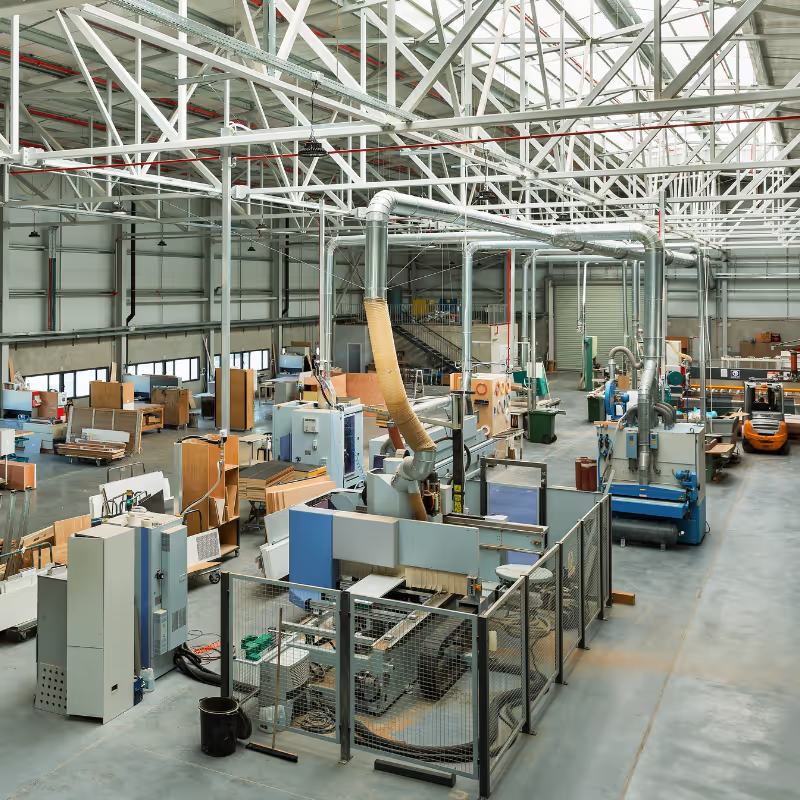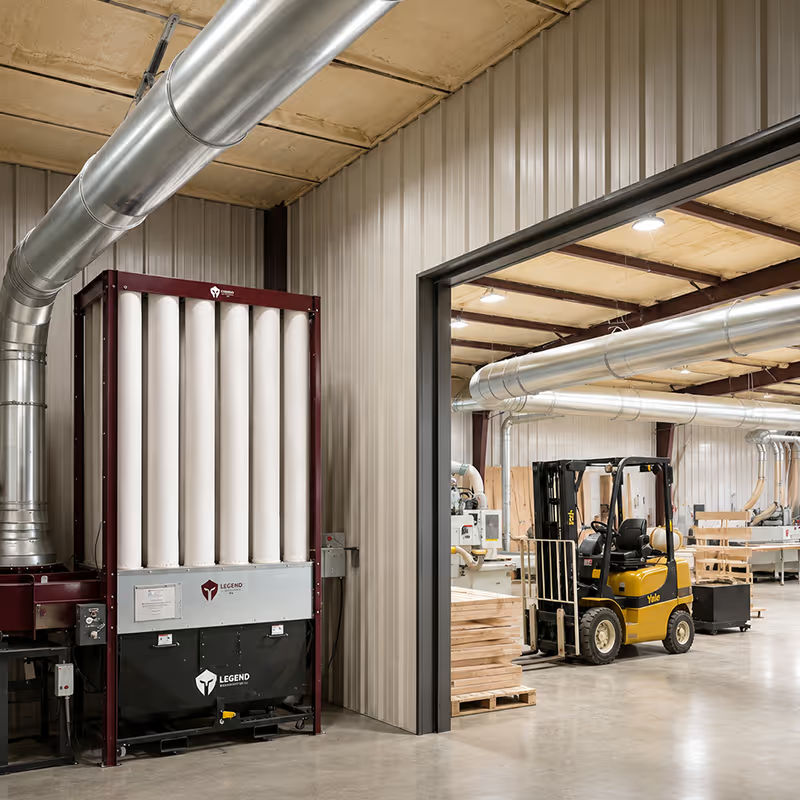

US Duct designs, manufactures and delivers industrial dust collection systems for woodworking plants, from the capture hood to the collector. Dust collection in the woodworking industry is more than moving air. Every branch and main has to hold transport velocity so chips, sanding dust and MDF fines stay suspended, and the system has to address combustible dust risk under NFPA 664. We engineer woodworking dust collection systems around your machines, materials and layout, with clamp-together duct that installs up to 70% faster, Legend separators and collectors, and 24-hour quotes through DuctQuote.

More machines mean more chips, more fine dust and more waste to move. A system that kept up with three machines rarely keeps up with ten. If drops are losing suction, bags are loading fast or waste handling is eating labor hours, the system needs engineering, not another patch.

Your woodworking operation is growing. You’ve added exciting machinery that makes operations more efficient and allows your woodworking facility to expand. And then you realize.... The faster you make product, the more dust and waste your shop needs to manage.
You have mastered making great products. Dust collection is a different discipline. Wood dust is combustible, sanding fines settle in low-velocity runs, and every machine you add changes the airflow balance of the whole system. Questions plant managers and dealers bring us:


US Duct has designed dust collection systems for woodworking plants from single-machine shops to multi-line production facilities. We look at the whole system, not just the duct.
A woodworking dust collection system works only as well as its weakest point. Here is how US Duct builds one, from the capture point forward.
Every machine gets a hood matched to how it throws material. That means router hoods for CNC routers, radial arm saw hoods, and canopy hoods where material leaves in many directions. Floor sweeps handle bench and floor cleanup. Ball joints and swivel joints follow moving heads. Flex hose is kept as short as possible, because every foot adds static pressure.
Required CFM at each machine equals port area times transport velocity. At 4,000 FPM, a 4-inch port needs about 350 CFM, a 5-inch port about 545 CFM and a 6-inch port about 785 CFM. System CFM is the sum of the machines that actually run at the same time, not every machine on the floor.
Fine, dry wood dust needs roughly 3,500 to 4,000 FPM to stay suspended. Chips, damp or green wood waste and dense MDF dust need roughly 4,000 to 4,500 FPM. Branches enter the main through clamp-together laterals and wyes at shallow angles, not 90-degree tees, to limit pressure loss. The main steps up in diameter as branches join, so velocity holds from the farthest machine to the collector. Blast gates close idle drops so open drops keep their velocity.
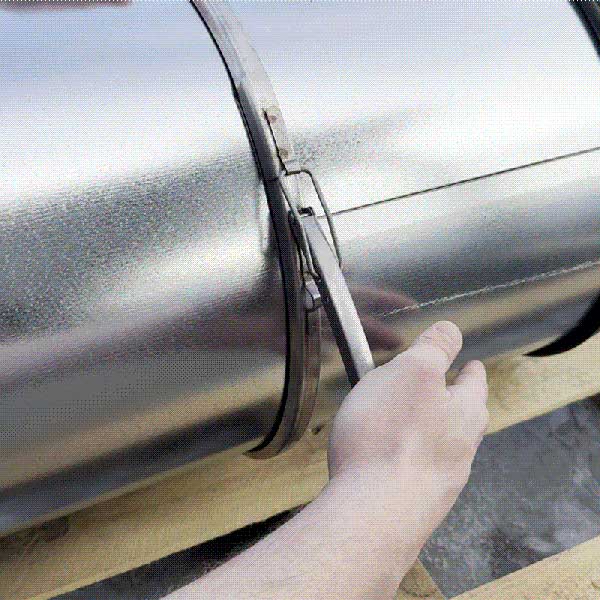
Our standard clamp-together duct comes in Galvanized Steel or Stainless Steel in 18 to 24 Gauge. Heavy Gauge construction, up to 10 Gauge, is available for green wood and abrasive material. Flanged ductwork handles large-diameter mains and permanent infrastructure. Every clamp-together component is field-adjustable, so the system can be rerouted when the floor layout changes.
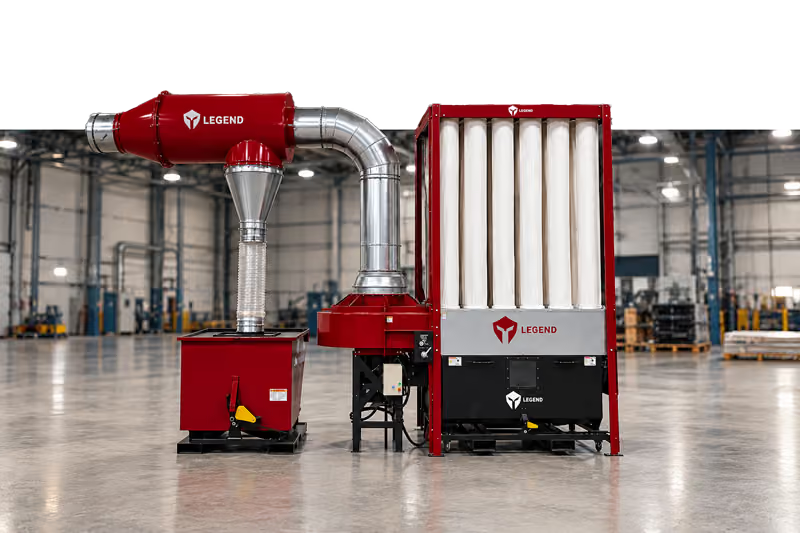
A spark trap stops sparks before they reach the collector. The Legend Inline Separator uses centrifugal force and reduced air velocity to capture up to 90% of debris before it reaches the bags. That means longer bag life, fewer bag changes and steadier collector performance. See the Legend Inline Separator spec sheet, or compare inline separators vs. cyclones.
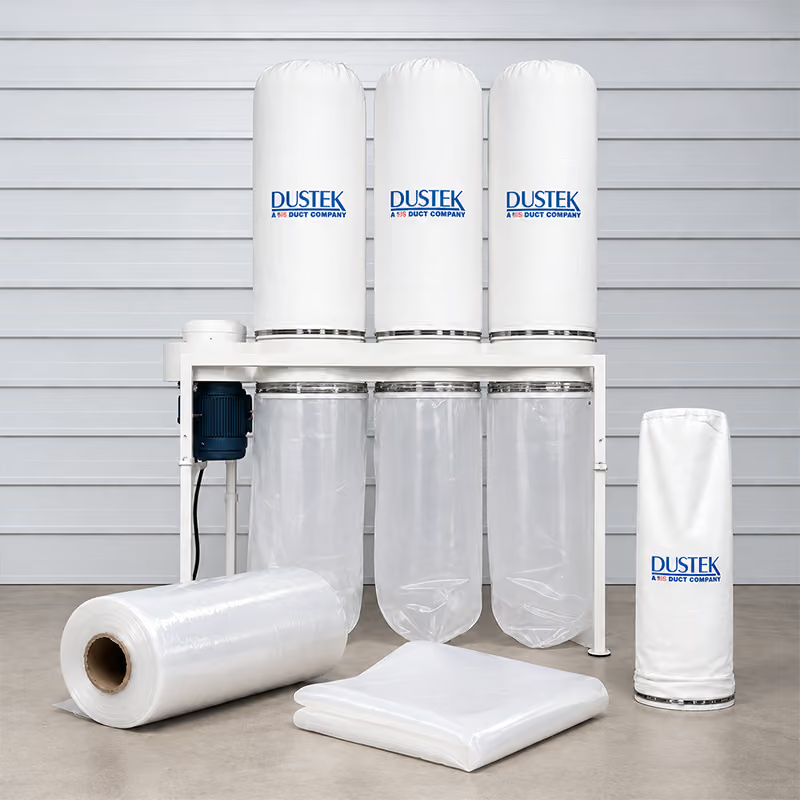
The Legend Baghouse Collector uses even-fill distribution, abrasion-resistant bags and manual shaker cleaning in a compact footprint. Dustek dust collectors cover smaller footprints. A rotary airlock meters waste out while holding the pressure differential. The Legend Quick-Change Hopper cuts bag-change time. Explosion isolation, such as a no-return valve on the collector inlet, keeps a deflagration from traveling back into the plant. After the fan, a no-loss stack or rain cap finishes the exhaust.
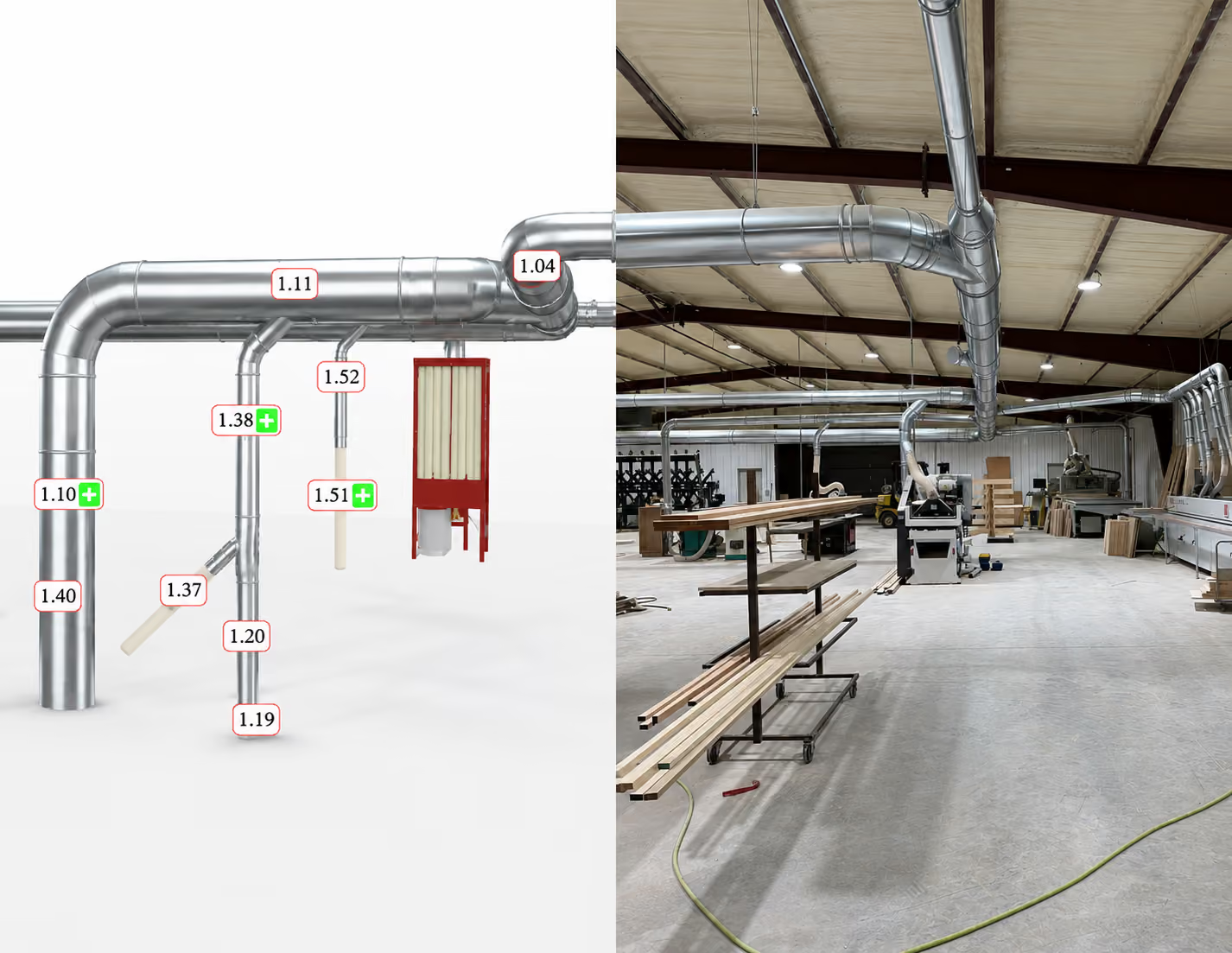
Every system is drawn in DuctQuote, our free 3D design and quoting tool. You get static calculations, a bill of materials, an order of install and a quote within 24 hours. Then we build it in the USA to your exact specs.
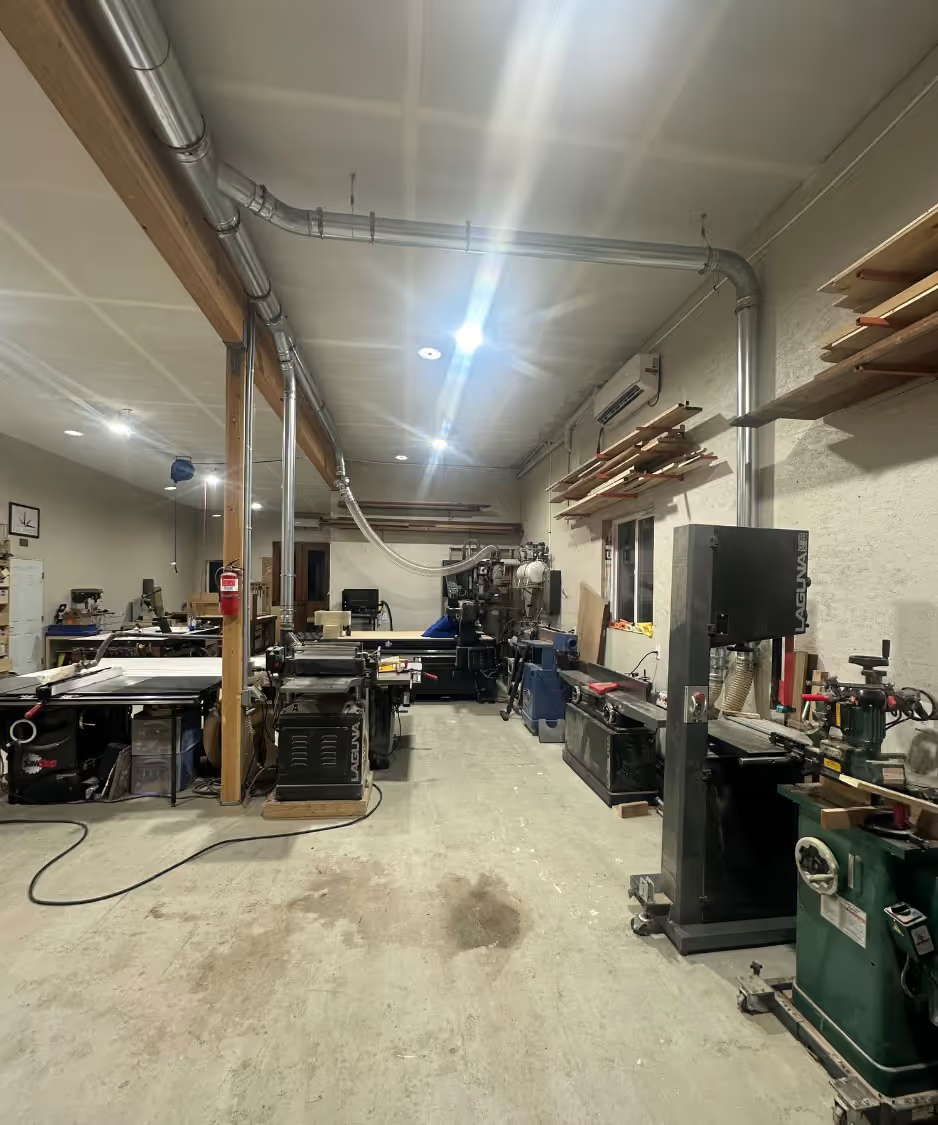
Woodworking facilities often face combustible dust challenges governed by NFPA 664, the standard for the prevention of fires and explosions in wood processing and woodworking facilities. OSHA also lists NFPA 664 among the consensus standards addressing combustible dust hazards. US Duct systems are designed with awareness of applicable OSHA and NFPA standards. In practice, that shapes four parts of the system:
A dust hazard analysis (DHA) for your facility defines the specific requirements. We engineer the ductwork and components to fit the protection strategy your DHA and your authority having jurisdiction call for.
A sawdust collection system has to keep transport velocity high enough to hold combustible particulates in suspension across every branch and main, even with many machines running at once. Expect the following from a US Duct system:
US Duct designs, manufactures and delivers complete woodworking dust collection systems from the capture point forward. Every system accounts for machine type, material characteristics, facility layout and collection capacity.






Fast quoting, dependable lead times, and products your customers can count on. We help you keep projects moving and customers coming back.

Technical support, configurable solutions, and performance-focused ductwork designed to fit complex applications and system requirements.

Simple installation, reliable fit-up, and responsive support that helps crews stay efficient in the field and on schedule.

Practical solutions built to improve airflow, reduce maintenance, manage waste, and keep production running smoothly.





Before switching to US Duct, cleanup around our CNC routers was a constant battle. The new system helped improve airflow consistency and dramatically reduced dust buildup across the shop.

I appreciate the service greatly. We are big fans of your duct system, very gratifying to see quality service behind a quality product.
Working with US Duct is fantastic. Their quality of character is very much why US Duct is our partner. They bring amazing support, speedy service and are truly a pleasure to work alongside. Hats off to you!!
Adolfo is a professional in his craft. He is easy to work with and efficient. He is prompt in providing the information you need to help with install deadlines.
We run planers, sanders, and CNC equipment all day. The system has handled the airflow demands without becoming a maintenance headache.
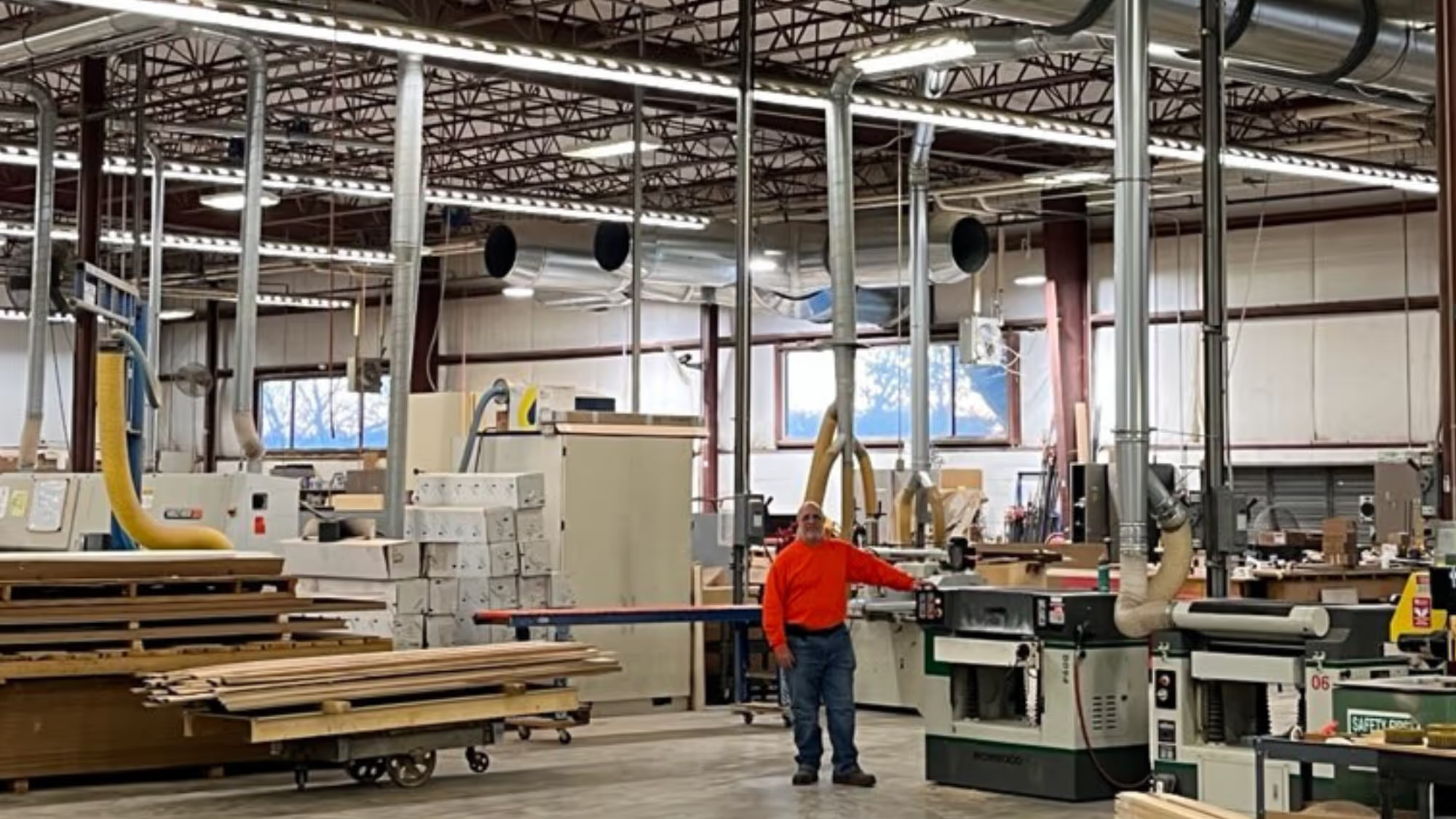
Everything came together nicely, I like the idea that I'll be able to add easily to the system if needed.

We do a lot of dust collection systems across the country. From very small, single indoor collectors connecting to a single machine to the largest plants in the Southeast connecting dozens of machines to 100K CFM collectors, we lay out and install systems of all sizes. One constant in those systems is the dust pipe, engineering, and excellent service we get from US Duct. Their designers are accurate and thorough, their materials are the highest quality and their service is prompt and professional. US Duct is our "go-to" for dust pipe, engineering, and all things ductwork.
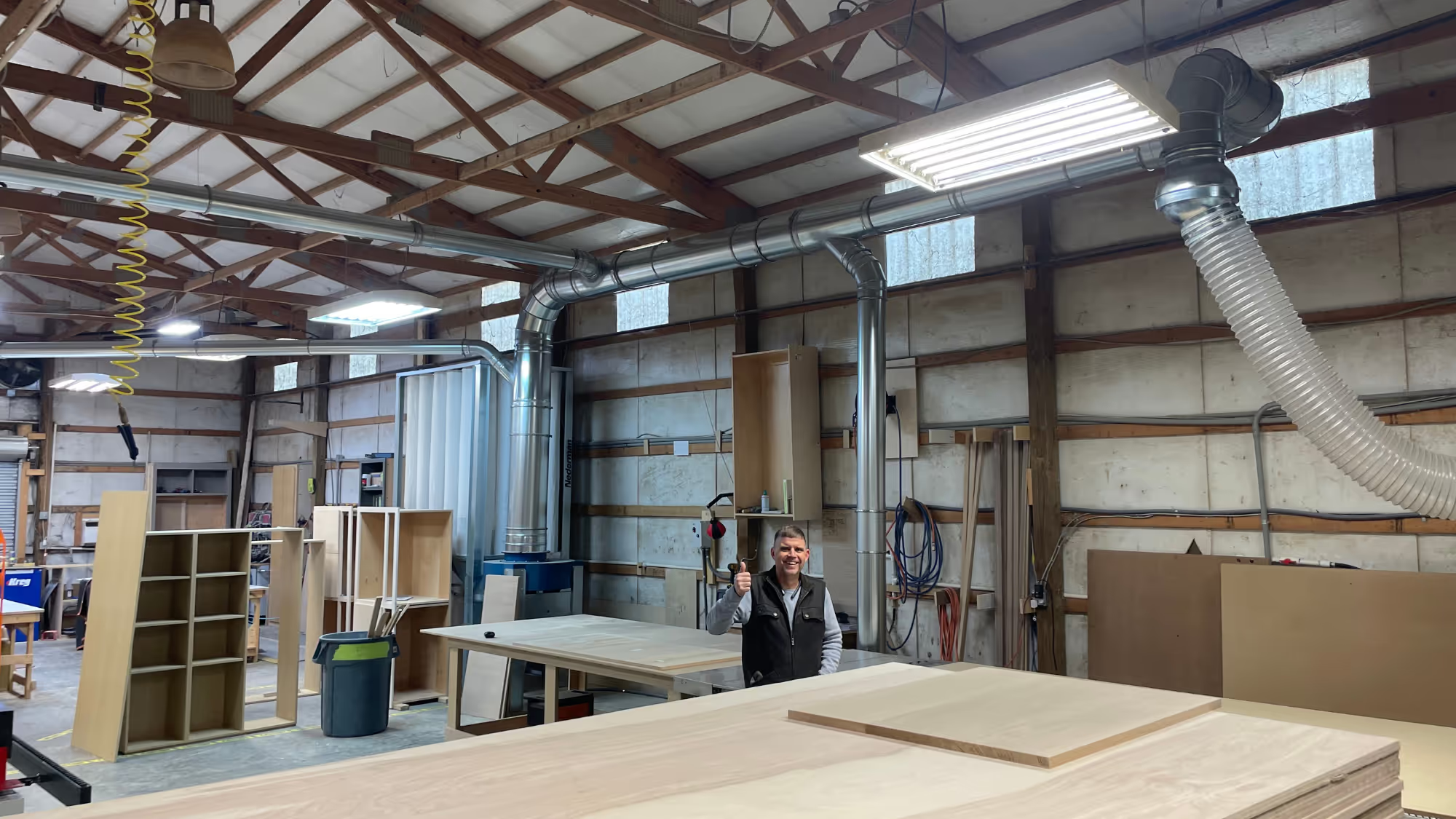
US Duct was great to work with. The design process was simple and they took the time to get everything dialed in for our shop. The 3D drawings made reviewing the ducting design very easy. It only took a day to get the entire system together. Would definitely recommend to any other cabinet shop owners out there.

I wanted to share my experience working with US Duct. I have worked with US Duct from the time Steve McDaniel left his previous employer many years ago. I have enjoyed a close working relationship and excellent service with all the staff I have worked with at US Duct. [Duct] has provided stellar service and support.
I wanted to give you a heads up I just spoke to Upstate Door, and they are super happy you and your team made the pickup of their product all work out as this is my largest customer, and plan on trying to pipe the entire factory once they get all the workflow changes done and this will definitely put a feather in your hat!!! We probably do not tell you enough that we always appreciate all that US Duct does because it has become a common practice for you to go the extra mile !! Thanks Again, Kyle.
Working with US Duct has been a fantastic experience for me and our team at J and G Machinery. We transitioned several years ago from our supplier Nordfab to US Duct and this experience has proven to be one of the best decisions for our company. The quick response, accurate 3D drawings for each project, pricing, and just the overall understanding of the support we needed as a company has been a huge determining factor in that this decision was correct for us as a company. Also, [the US Duct] team provide us with the ability to clearly articulate ideas and feedback which contributes to our team's overall effectiveness and success in the field. By doing this, it allows us to convey to our customers the correct dust pipe layouts that best fits what they are looking to achieve within their facility.
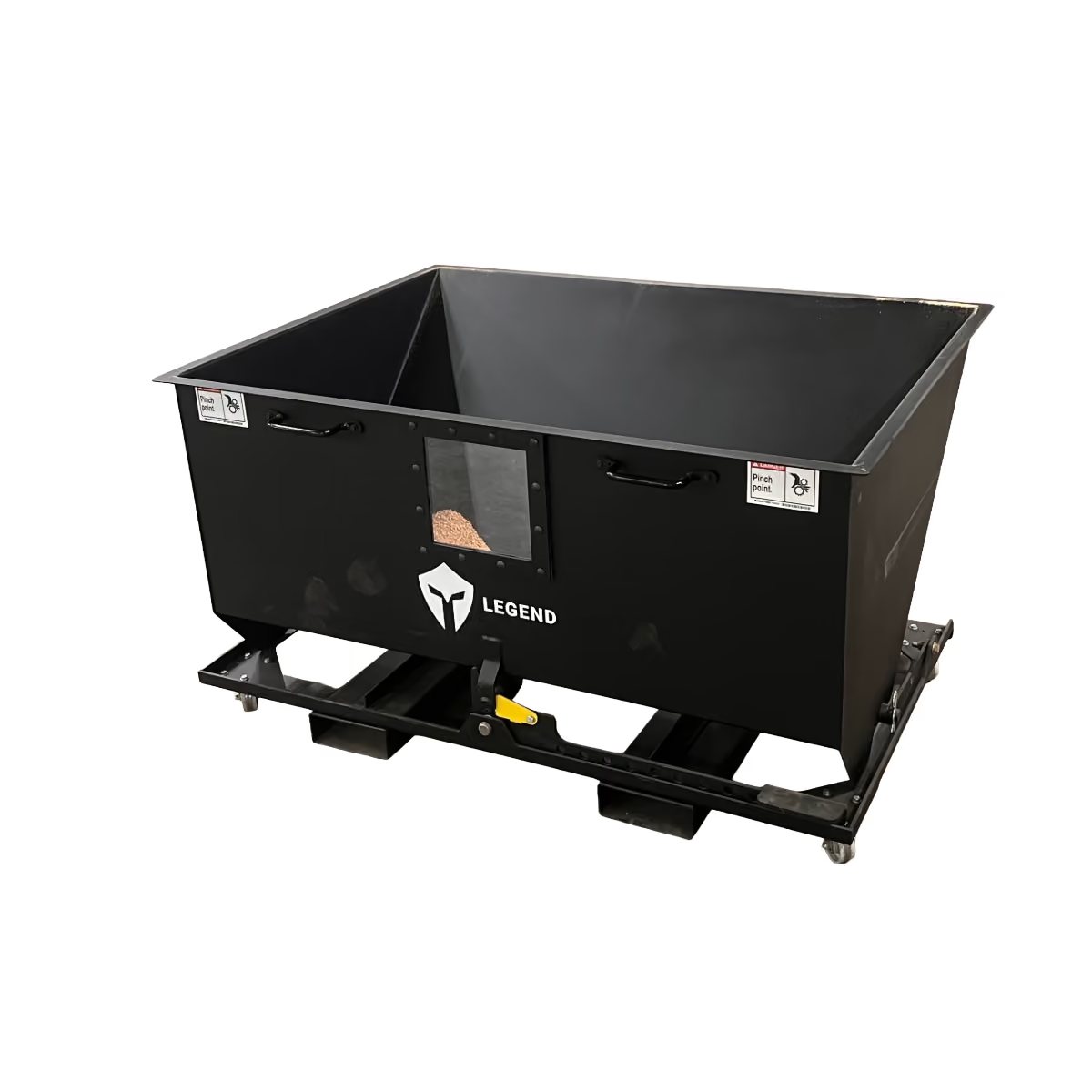
Get started on a solution tailored to your needs, or explore our range of inline separators, self-dumping hoppers, and baghouses for even more ways to optimize your workspace.