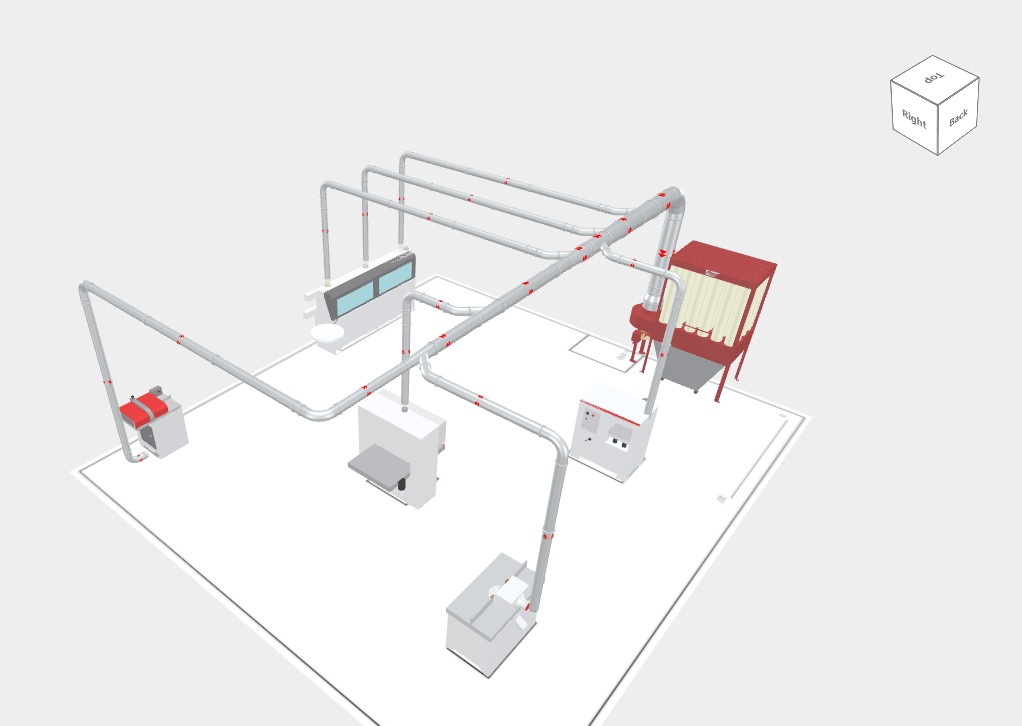

How Poor Hood Design Impacts Dust Collection Performance
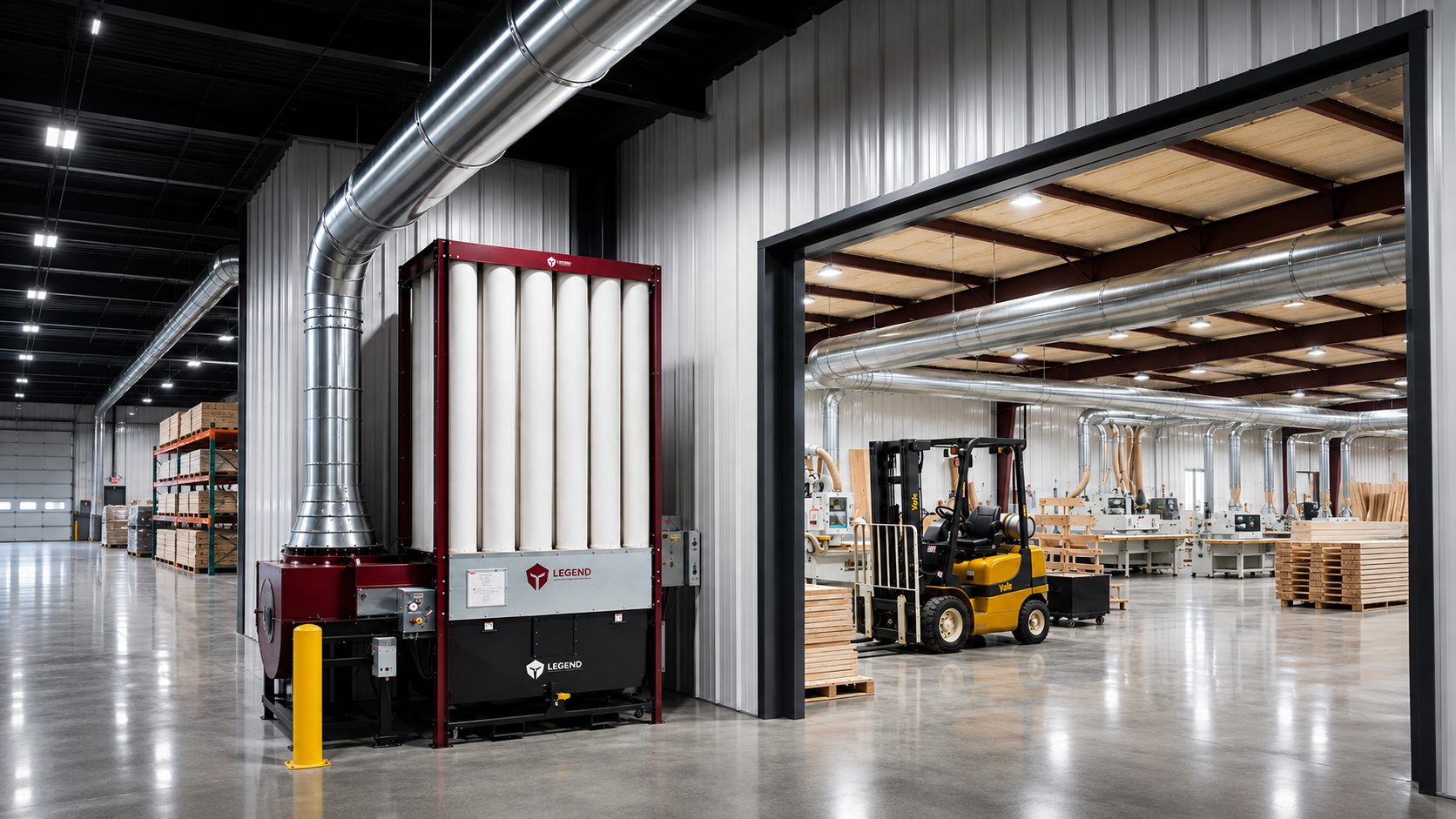
A dust collection system is only as good as the point where it captures dust in the first place. Design, properly sized collectors, and fans can all be exactly right, yet still fight fugitive dust, nuisance buildup, and employee complaints because the hood itself was never designed for the job. Hood design doesn't get much attention because it looks simple. But the hood is where airflow has to do the hardest work — reaching out, pulling contaminant-laden air away from a moving process, against gravity, momentum, and whatever cross-drafts are moving through the shop floor. Get it wrong, and no amount of collector capacity downstream fixes it.
Airflow Fundamentals: What the Hood Actually Has to Do
Before getting into what goes wrong, it helps to be clear on what a hood is engineered to accomplish. A handful of terms drive every hood decision:
- CFM (cubic feet per minute): the volume of air the hood needs to move to capture and carry away contaminants generated at the source.
- Capture velocity: the air speed required at the point of dust or fume generation to pull the contaminant into the hood before it escapes into the room. Requirements vary significantly by process — fine, low-momentum dust needs far less than heavy grinding debris or fast-moving weld fume.
- Static pressure (SP): the total resistance the fan has to overcome across the whole system — hood entry loss, duct friction, fittings, and the collector all add up to it.
- Hood entry loss: as air accelerates from open room air into the hood opening, it creates increased static pressure due to turbulence at the entry. Sharp, unflanged openings create more SP here than tapered or flanged designs.
- Transport velocity: once contaminant is airborne inside the duct, this is the minimum air speed needed to keep it suspended and moving toward the collector instead of settling out in the run.
None of these live in isolation. The CFM and SP loss at the hood become part of the total system's airflow and pressure budget — which is exactly why hood design mistakes don't stay contained to one branch.

DuctQuote Update Oct 2026

What Facility Managers Should Know About Static Pressure