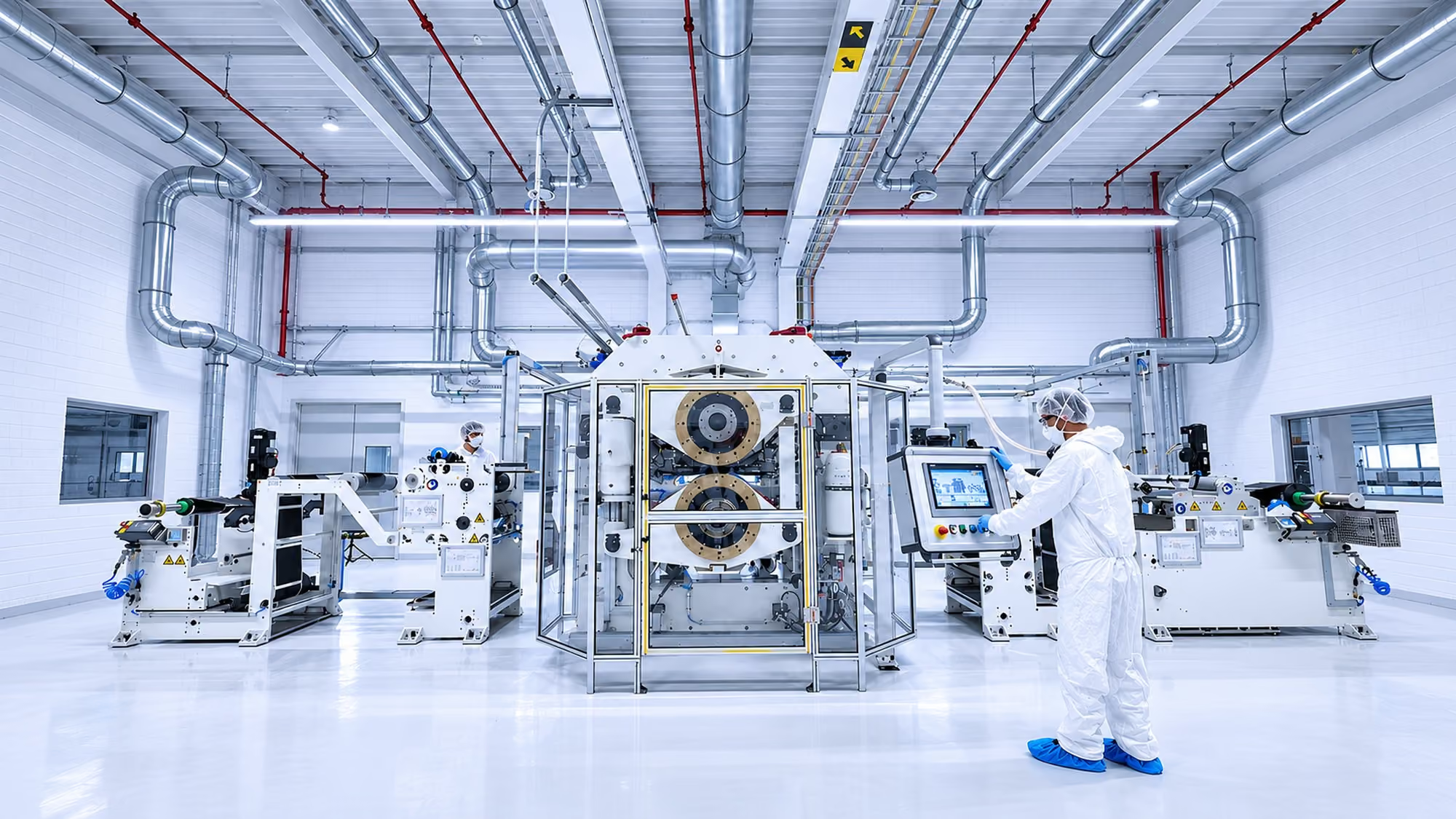

How Legend Performance Products Improve Dust Collection Performance
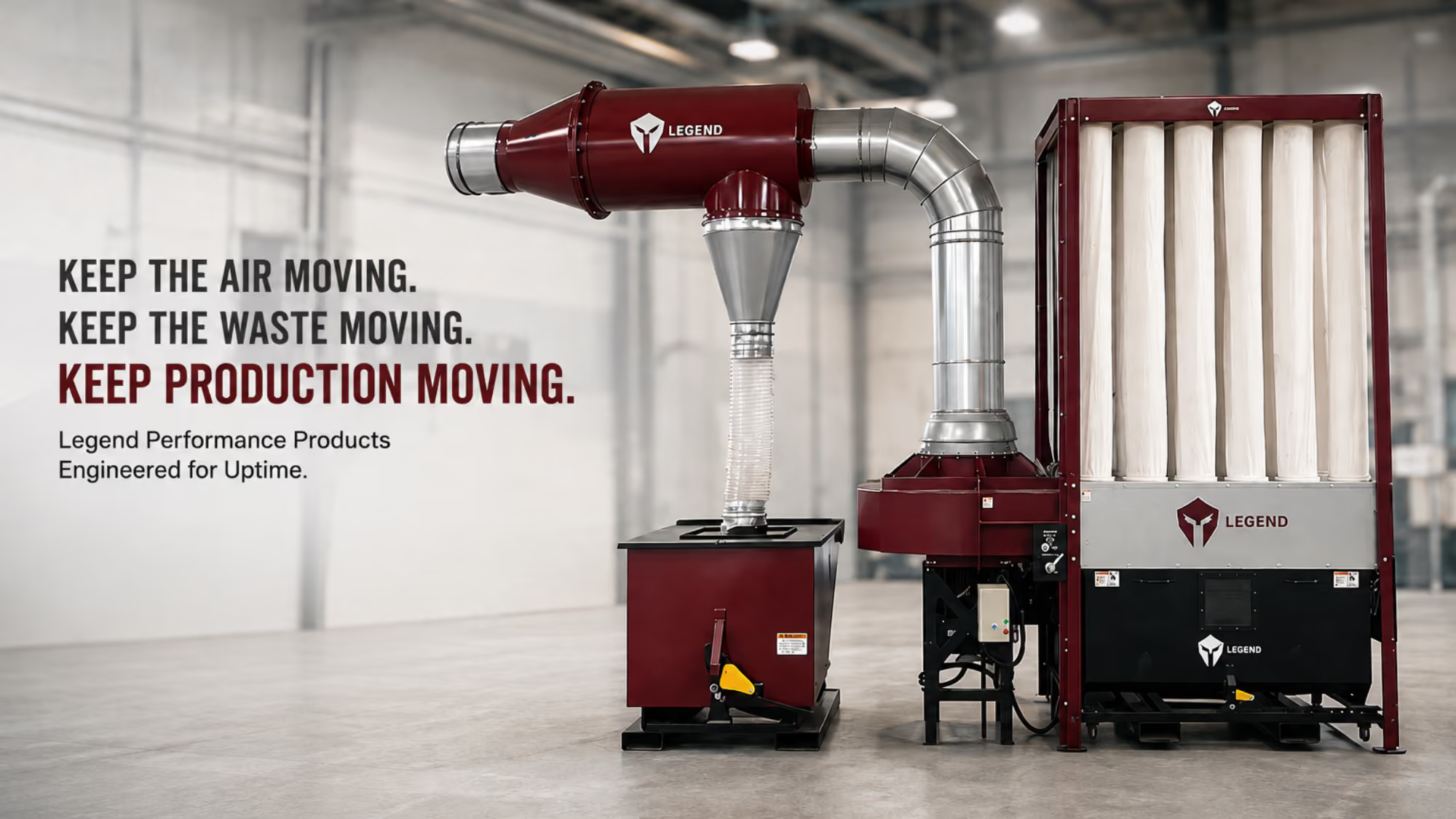
What can Legend do?
In many industrial dust and waste collection systems, the ductwork is only one part of the performance equation. Once airborne material is captured and moved through the system, the collector has to separate that material efficiently, maintain consistent airflow, handle the collected waste, and allow that waste to be removed without unnecessarily interrupting production.
That is where Legend Performance Products can make a measurable difference.
The Legend line from US Duct is focused on the performance side of industrial dust collection, waste handling, and fume extraction systems. Legend collectors are engineered to provide many of the operating advantages associated with large central collection systems, in a smaller package designed for indoor and more consolidated applications.
They are designed around a simple objective: keep the air moving, keep the waste moving, and keep production moving.
Collector Design Matters
A dust collection system works best when airflow stays consistent, pressure drop is controlled, and collected material moves where it is supposed to go.
But what happens to the air and material once they enter the collector is as important as getting the air and waste to the collector. Undo turbulence or restrictions rob the system of needed static pressure.
Many small collectors use a hopper with sloped sides to funnel collected waste toward bags or containers below. While that seems logical, the reduced area of the hopper combined with air entering in line with the collection bags can create an unintended Venturi effect.
The incoming air can create Venturi effect suction on the first collection and waste bags, pulling them inward and effectively reducing their ability to receive material. The remaining airflow and waste are then concentrated toward the bags farther downstream. As those waste bags fill, material can even be carried upward toward the filter bags.
Legend takes a different approach.
The lower section of a Legend collector uses straight-sided, open hopper construction rather than immediately constricting the airflow through a sloped hopper. This gives the incoming air room to expand and equalize throughout the chamber.
The result is more even airflow and material distribution across the collector, without the same Venturi effect on the waste bags.
Instead of simply building another small baghouse, Legend was engineered around how air and waste actually behave inside the collector.
Keep Production Running While Waste Is Removed
Collecting the material is only part of the job. Eventually, somebody has to empty it.
And that is where a seemingly small design difference can become a major operational advantage.
Traditional small collectors commonly discharge into plastic bags. Changing those bags can take significant time, and the collector, and therefore the machinery connected to it, may have to be shut down during the process.
Other systems try to limit this by using rolling bins. But they must be manually positioned and mechanically clamped to outlets beneath the collector.
Legend uses Quick-Change Hoppers that are pneumatically lifted and sealed against the bottom of the collector by using a single lever.
With hoppers used in pairs, a full hopper can be exchanged for an empty one in approximately 30 seconds.
That means the operator still has to dispose of the collected waste, but the collector doesn’t have to wait. Production can continue while the full hopper is emptied.
This is one of the concepts behind the Legend collector: bring an important benefit of large outdoor central systems, which can continuously discharge waste into a dumpster, to a smaller indoor collector.
It isn’t about eliminating waste handling. It’s about separating waste handling from production time.
When an Inline Separator Makes Sense
The Legend Inline Separator is another available tool, but it is not required as part of a typical Legend collector installation.
The Legend collector and Quick-Change Hopper system are designed to handle normal collected material without requiring a separate pre-separator.
Where the Inline Separator becomes particularly valuable is in applications generating unusually large volumes of chips, shavings, trim, or other waste. It is extremely beneficial for controlling waste and frequent bag changes in existing competitive collectors.
Installed before the collector, the separator uses centrifugal force and reduced air velocity to remove a large portion of heavier debris from the airstream before that material reaches the collector.
It can capture up to 90% of debris before it reaches the collector, helping reduce collector loading and extend filter or bag life.
For woodworking facilities, plastics processors, and other manufacturing environments producing exceptionally high volumes of process waste, the separator provides additional waste capacity when the application demands it, not complexity when it doesn’t.
Engineered Around the Application
Dust collection isn’t simply about moving a certain number of CFM. Airflow, static pressure, transport velocity, pressure drop, duct design, and the requirements of the machinery all affect how well a system performs.
Legend collectors are available in 5, 7.5, and 15 HP configurations that give users additional flexibility in matching the collector to the application.
A VFD-equipped configuration on the 15HP 10” static unit allows the fan to be adjusted to the static pressure required by the system rather than forcing the system to operate around a fixed fan condition.
For lower-static applications, Legend can also be equipped with a very quiet 15 HP fan designed around approximately 8” of static pressure.
The objective is not simply to provide horsepower. It is to provide the airflow and pressure the application actually requires, without unnecessary noise or energy use.
Designed for the Real World
Performance isn’t limited to what happens after the collector is switched on.
Legend collectors are also designed with installation and day-to-day use in mind.
Typical assembly takes approximately 45 minutes.
Once operating, the collector is designed to be quiet, simple to service, and fast when waste needs to be removed.
Combine that with:
• Straight-sided hopper design for more even airflow and waste distribution
• Quick-Change Hoppers with approximately 30-second changeover
• Pneumatic hopper lifting and sealing
• 15 HP VFD capability for application-specific adjustment
• A quiet, lower-static 15 HP fan option
• Approximately 45-minute assembly
• Optional Inline Separator capability for unusually high-volume waste applications
…and the difference becomes more than a collection of individual features.
It becomes a collector designed around uptime.
A Strong Fit for Industrial Dust and Waste Applications
The Legend Performance Line is especially relevant for woodworking, plastics manufacturing, and other industrial environments where dust, chips, shavings, and process waste have to be captured reliably without unnecessarily interrupting production.
Depending on the application, Legend collectors, Quick-Change Hoppers, Inline Separators, rotary airlocks, and related components can be configured to address both collection and waste-handling requirements.
But the collector is the heart of the system. The separator is an option when the waste volume requires it.
That distinction matters.
Designed to Help the Whole System Work Better
Legend Performance Products aren’t simply accessories added around a conventional collector.
The collector itself has been engineered differently, from the way air enters and equalizes in the lower chamber, to the way waste is distributed and removed, to the way fan performance can be matched to the application.
For plant managers, that can mean less downtime and faster waste handling. For contractors, it can mean a collector that is easier to assemble, install, and support. For operators, it can mean quieter operation and less time spent shutting equipment down just to deal with collected waste.
Large central dust collection systems have long offered the advantage of keeping production running while collected material is discharged and removed. Legend was designed to bring much of that same operating philosophy to a smaller indoor collector.
Keep the air moving. Keep the waste moving. Keep production moving.
Contact Us - Explore the Legend Line - Request a Quote
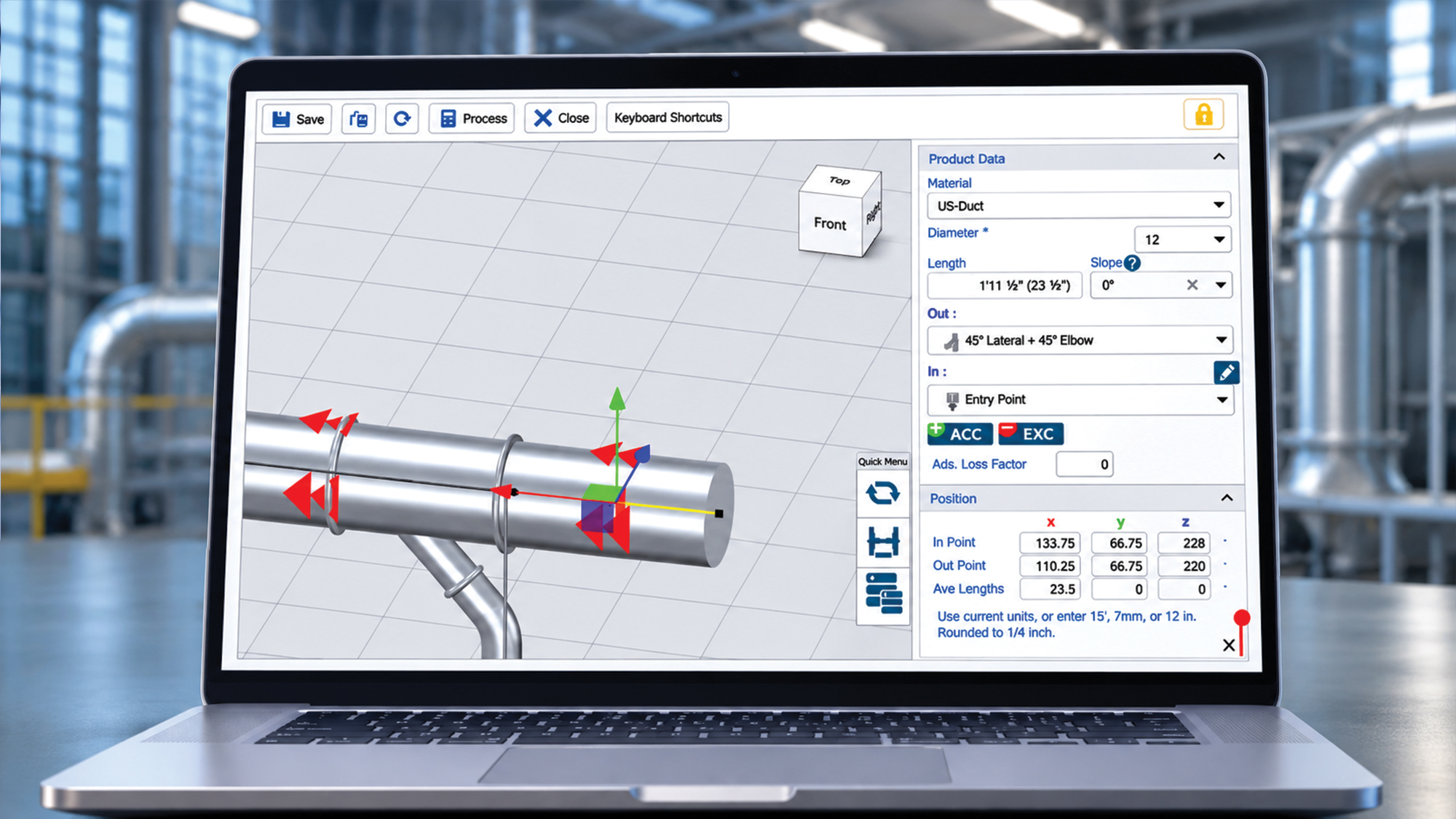
What’s New in DuctQuote: October 2026 Updates
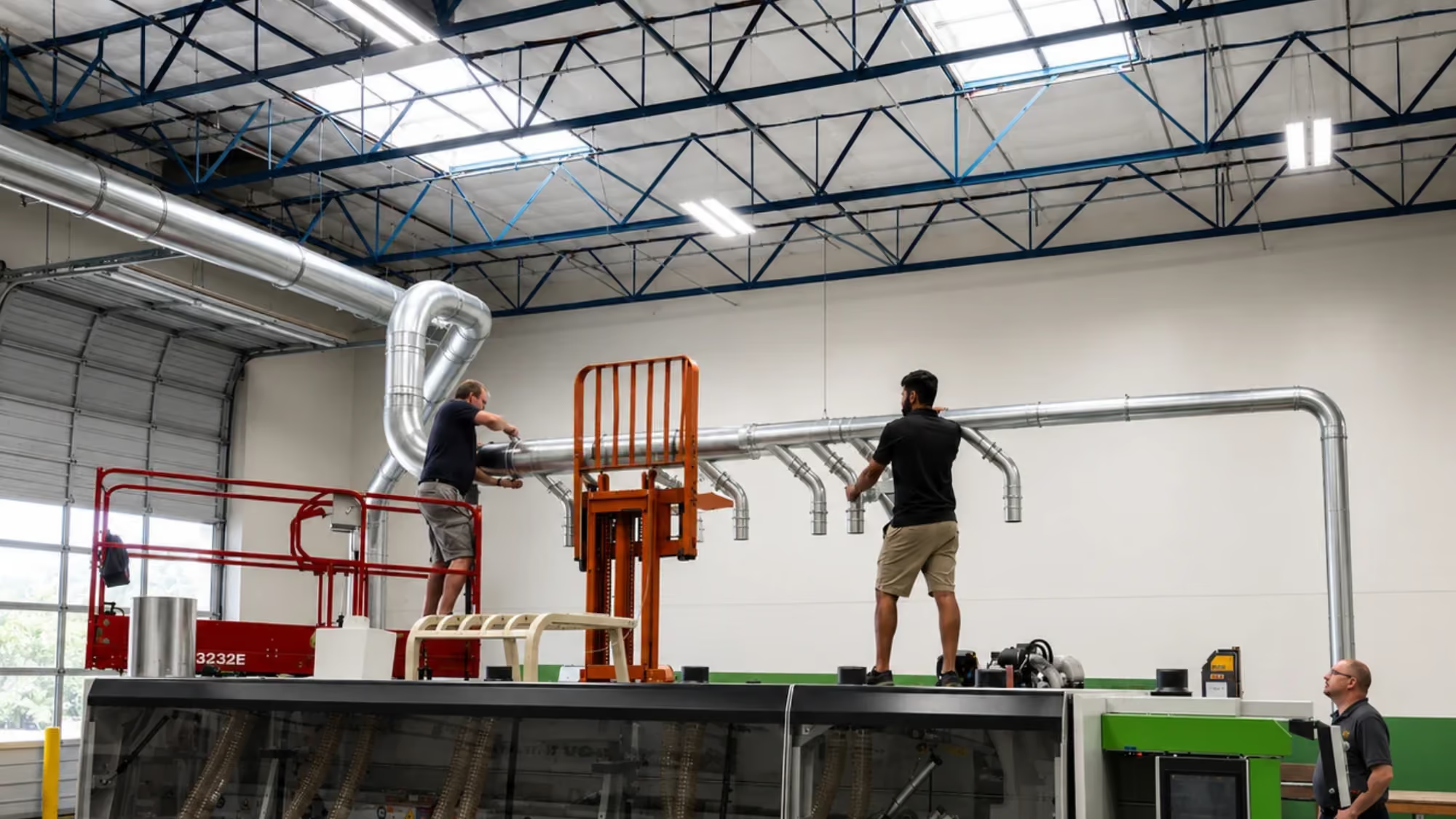
A Contractor’s Checklist for Successful Dust Collection Installations