

.avif)
Choosing the Right Duct Material for Corrosive Environments
Chemical plants and wastewater facilities are tough places for ductwork. The air moving through the system may carry corrosive fumes, chemical vapors, moisture, odor, particulate, or a combination of all of the above. In these environments, choosing ductwork based only on diameter, layout, or initial cost can lead to premature wear, leakage, maintenance problems, and avoidable downtime.
The right duct material should match the application, the airstream, the operating conditions, and the long-term performance expectations of the facility.
Why Material Selection Matters
In a standard dust collection or ventilation system, ductwork is expected to move air efficiently from the collection point to the collector, fan, or discharge location. In corrosive environments, the job gets more complicated.
Chemical processing applications may involve corrosive fumes, hazardous particulate, aggressive process exhaust, and regulatory considerations related to chemical exposure and combustible dust. Wastewater applications often add moisture-heavy air, corrosive gases, odor control needs, and ventilation concerns in confined or process areas.
US Duct’s industry guidance identifies chemical applications as needing corrosion-resistant materials, chemical fume extraction, hazardous particulate containment, and durable systems for aggressive environments; wastewater applications require corrosion-resistant systems, moisture-tolerant construction, odor and vapor control, and long-term industrial exhaust reliability.
That means the material choice is not just a purchasing decision. It affects system life, pressure drop, maintenance access, sealing performance, installation, and worker safety.
Galvanized Steel: Practical, but Not for Every Environment
Galvanized steel is commonly used in industrial ductwork because it is economical, widely available, and suitable for many general dust, mist, and waste collection applications. For facilities with mild exposure, dry particulate, or non-aggressive exhaust, galvanized duct can be a practical choice.
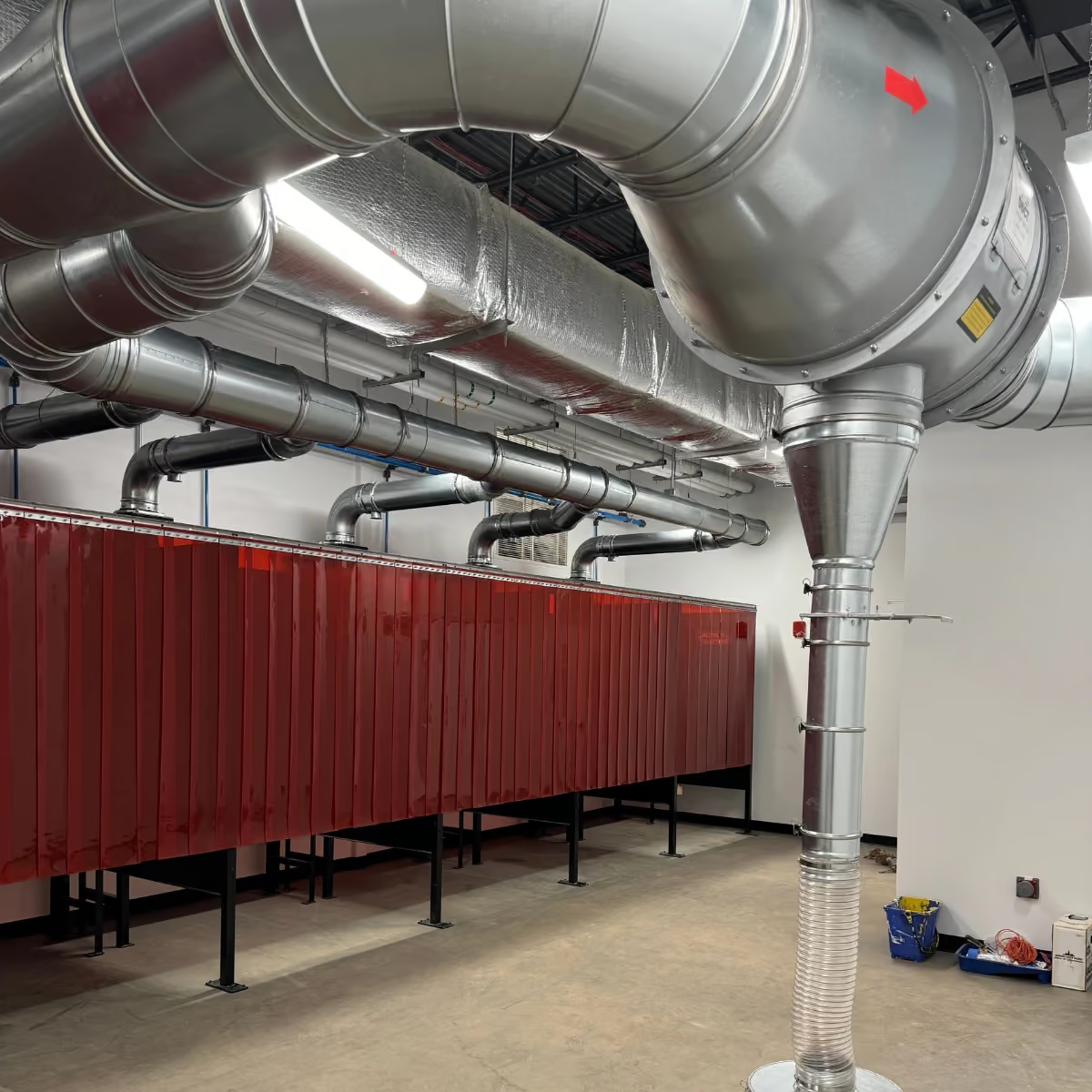
US Duct’s Clamp Together Ducting is available in galvanized or stainless steel, with standard gauges from 18 to 24 and heavy-duty gauges up to 10. The clamp-together format uses a rolled lip edge and gasketed over-center clamp, creating a modular system that installs quickly, adjusts in the field, and can be reused or reconfigured as layouts change.
However, galvanized steel has limits. In chemical and wastewater environments, constant moisture, acidic vapor, corrosive gas, or aggressive chemical exposure can shorten the service life of galvanized components. It may still be appropriate in sections of the system where exposure is limited, but the full airstream should be reviewed before making that call.
Stainless Steel: A Strong Choice for Corrosion Resistance
Stainless steel is often the better fit when corrosion resistance, cleanability, or long-term durability is a higher priority. In chemical facilities, stainless may be considered for corrosive fume handling, hazardous particulate containment, or process exhaust where the duct material must tolerate more aggressive conditions. In wastewater plants, stainless can support odor control and vapor exhaust systems where moisture and corrosive gases are a concern.
For applications where leakage is a major concern, US Tubing offers a modular, laser-welded, airtight clamp-connect system designed for leak-free oil mist, coolant mist, and positive-pressure applications. It combines the sealing performance of flanged-and-gasketed ductwork with the speed and flexibility of clamp-together installation. For systems handling oil mist before it enters the ductwork, Horizontal Oil Mist Accumulators and Vertical Oil Mist Accumulators can improve collection efficiency and help protect downstream equipment.
Stainless steel is not always the lowest upfront cost, but in corrosive environments it can reduce problems associated with premature replacement, recurring repairs, and air leakage. The best choice depends on the chemical makeup of the exhaust, the temperature, moisture content, pressure conditions, and whether the system operates under negative pressure or positive pressure conveying.
Flanged Ductwork for Heavy-Duty Applications
Some corrosive environments also involve large diameters, higher pressure, abrasive material, or permanent infrastructure needs. In those cases, flanged ductwork may be the right format.
US Duct’s flanged ductwork is designed for large, high-pressure, abrasive, and engineered applications where durability and structural integrity matter. It is available in black iron, galvanized steel, and stainless steel, with light to very heavy gauges depending on the application.
For wastewater treatment plants, industrial scrubber connections, chemical exhaust systems, or heavy process ventilation, flanged construction can provide strong mechanical connections and long-term durability. Vanstone edges may also help with field alignment because the flange can rotate freely to align bolt holes.
Corrosive considerations may be the result of conveyed material/contaminant as well as the surrounding atmospheric environment, in which case the tightness of the duct will be a major consideration.
In those cases, either full welded or gasket systems are the only choice. Within these two choices there are; however, a couple of options:
- Flanged duct with gaskets (The Flanges need to be welded to the duct.)
- Tubing with airtight couplings.
- Clamp Together Tubing with full gaskets.
These are listed in descending order of price, difficulty of installation, and tightness of seal.
Specialty Materials and Coatings
Not every corrosive environment fits neatly into “galvanized” or “stainless.” Some systems may require painted ductwork, heavier gauges, specialty gasketing, or custom-fabricated components. Material selection may also involve evaluating the compatibility of clamps, seals, fasteners, hoppers, in-line separators, or accessories that come in contact with the airstream.
For chemical industry applications, US Duct product focus areas include industrial ductwork, clamp-together ducting, waste collectors, in-line separators, hoppers, baghouse accessories, and spark traps for containment. Wastewater applications call for similar industrial ductwork and collection components, with added emphasis on corrosive gas exhaust, chemical vapor handling, moisture-heavy environments, and odor control.
In short, the right system may be a mix of materials and product types. One section might call for stainless tubing, another for heavy-gauge flanged duct, and another for a specialty fitting or transition.
Questions to Ask Before Choosing
Before selecting duct material for a corrosive environment, start with the operating conditions:
What chemicals or vapors are in the airstream? Is the system handling dry particulate, wet vapor, mist, fumes, or corrosive gas? What are the expected CFM, air velocity, static pressure, and pressure drop? Will the system run continuously or intermittently? Is it exposed to washdown, outdoor weather, high moisture, or temperature swings? Does the system need to support OSHA or NFPA-related considerations?
These details matter. Engineers may need to calculate airflow velocity, duct diameter, fan sizing, static pressure, and system balancing before finalizing components. Contractors need components that are accurate, to spec, and practical to install. Plant managers need a system that helps reduce downtime and supports a safer working environment.
The Bottom Line
Choosing the right duct material for chemical and wastewater environments is about balancing corrosion resistance, airflow performance, installation needs, and long-term reliability. Galvanized steel may be suitable for less aggressive applications. Stainless steel is often the better choice for corrosive, wet, or chemical-laden exhaust. Flanged ductwork may be preferred when the system requires heavy-duty construction, larger diameters, or permanent infrastructure.
The best results come from matching the material to the actual process conditions, not just the general industry category. When the airstream is corrosive, the ductwork needs to be designed with the same level of care as the equipment it supports.
Need help selecting duct material for a chemical or wastewater application?
Request a Quote or Contact US to review your system requirements.
What Facility Managers Should Know About Static Pressure
How Poor Hood Design Impacts Dust Collection Performance