

.avif)
Considerations for Replacing or Upgrading Your Industrial Ductwork System
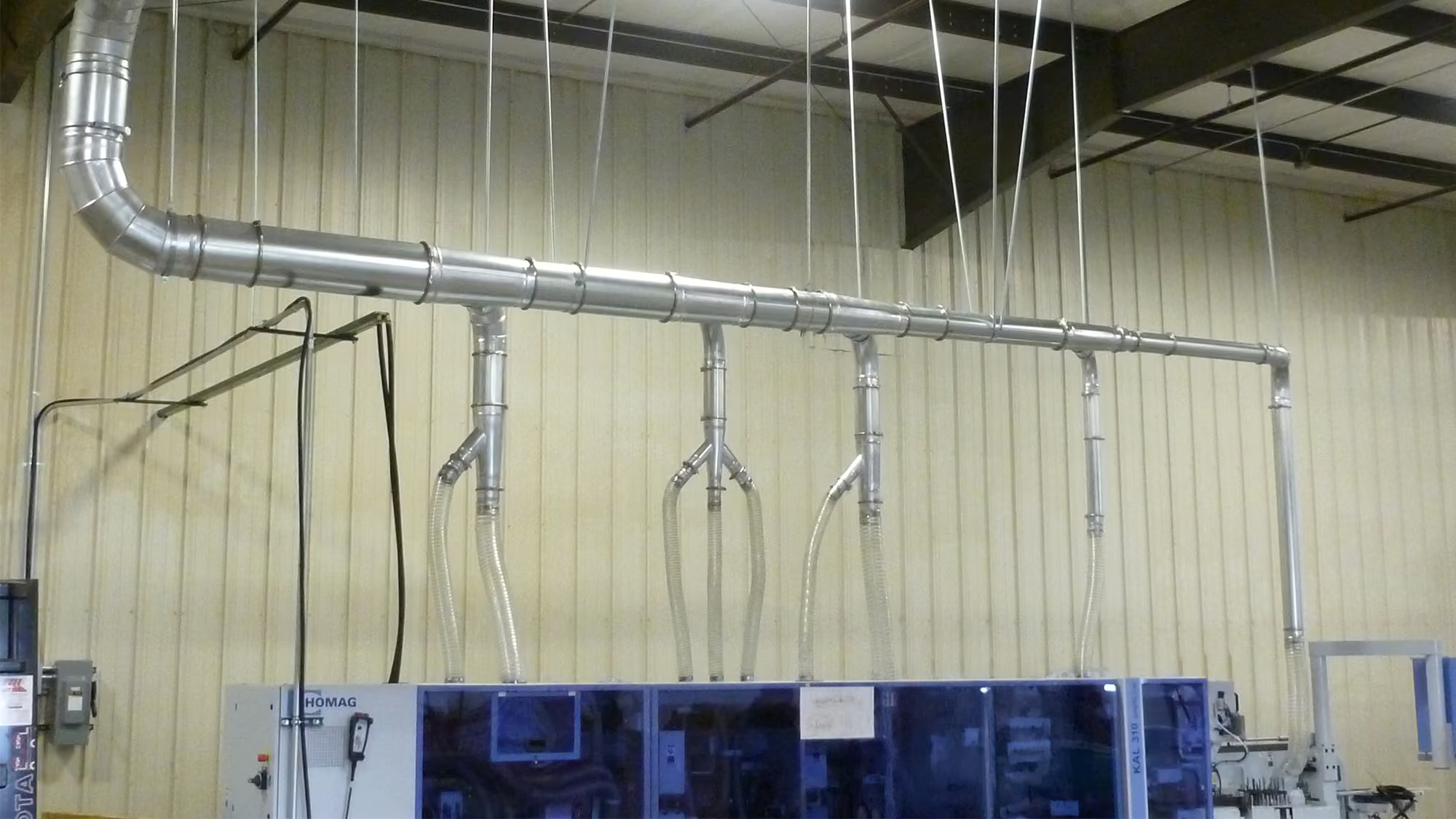
What Factors Dictate Replacing or Upgrading My Industrial Duct System?
Most companies correctly focus on adding or rearranging machinery to improve production and the bottom line. And while voltage and amperage changes may be obvious requirements to run the equipment, changes to your industrial ductwork and dust collection systems are not so obvious.
If left solely to a strategy of ‘getting duct’ to a machine, the impact can be as disastrous as trying to run the equipment off of undersized drop cords.
While the impact of drop cords is obvious, the under sizing and mis-sizing of ductwork is subtle. The machines will continue to run, but the dust will build up somewhere… on the machine, on the parts, in the employee’s lungs, in the duct, or maybe all the above.
Changing the electrical is typically a relatively easy, inexpensive, and easily understood problem. The solution is also relatively easy… Call the electrician.
Changing the duct is not so straightforward.
As a result, facility operators resort to calling HVAC contractors, mechanical contractors, riggers or attempting to change it themselves. Each of these, often “go-to” options, present problems themselves. HVAC and mechanical contractors deal with blowing air- not pulling air and dust. And riggers? Well, they cut and fit to make things ‘work’. And doing it yourself? Come on! You've got your business to focus on.
The truth is that the problem seems larger to most facility owners than it really is. While they know their products and business operations well, they often have knowledge gaps when it comes to how dust-laden, air flows and how to build a system for optimum performance. And many remain unsure of how to get answers to their questions.
And the questions are many:
· Do I need a new system?
· Can I simply rearrange what I have?
· What happens when I move the equipment again?
· How much will it cost?
· What happens if I don’t make the changes?
· Who can provide me with the latest and most complete product line?
· Who can help me with my special connections?
· Who can tell me about gated systems?
· What air velocity is required to move product cost-effectively?
· Are there options for systems with mist that won’t leak?
· Who will tell me what I need to know and help me understand my options?
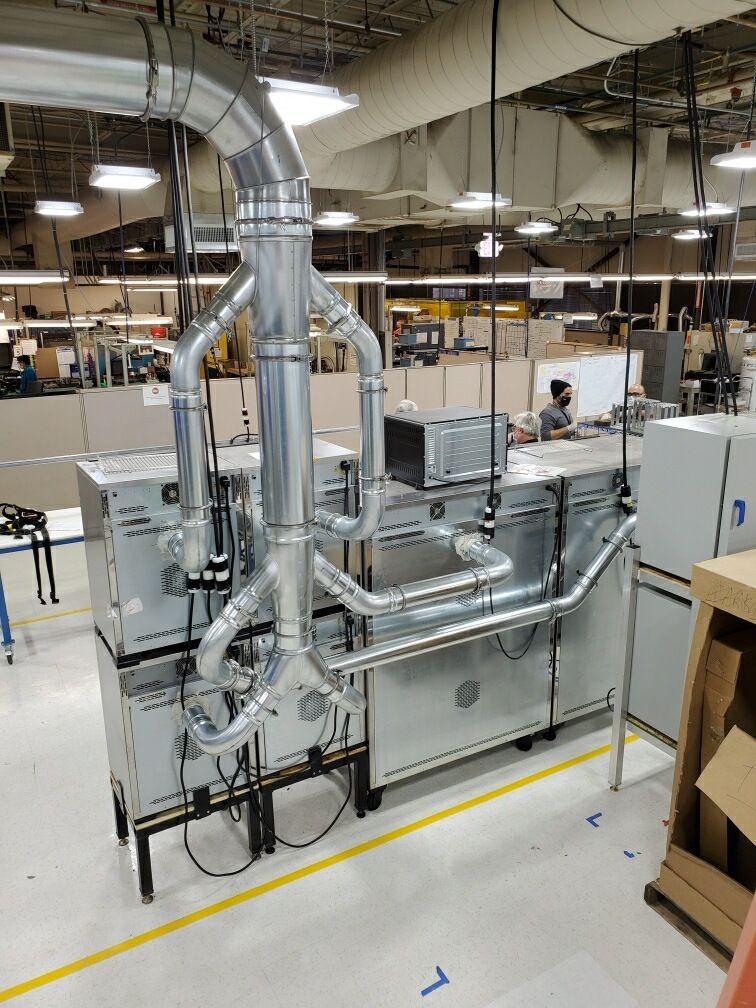
For many operations, clamp-together duct or clamp-together tubing fills the vast majority of needs. But there are also many other operations that require larger duct with flanged-style ductwork and those that need heavy gauge.
In the end, the solution is much easier than agonizing over the questions... if you have a competent partner to assist you.
It just makes sense. Afterall, no one was ever happy engaging their brother-in-law to wire their room addition unless, of course, the brother-in-law was an expert electrician.
Here is a simple help guide to these answers.
· Find someone or a company that focuses on ducting AND dust collection. They are not the same thing. Dust collection is the removal of dust from the air. Ducting is getting ALL the dust to the collector in an efficient manner.
· Be willing to spend a modest amount of time to provide the selected company with an understanding of:
- Your production equipment, including the location of collectors.
- The material to be collected and the volume anticipated.
- Current issues with material, such as large pieces of waste and stringy material catching in the system or the buildup of waste material around certain points.
Contact Us!
Request a Quote
DuctQuote Update Oct 2026
What Facility Managers Should Know About Static Pressure